Chobani Lawsuit 2026: Payouts, Eligibility & Claims Explained
Chobani is facing a fresh wave of legal trouble in 2026, and this time it’s about the number on the lid. Two separate class action lawsuits filed in the Southern District of New York accuse the yogurt giant of inflating the serving size on its “20g Protein” Greek yogurt tubs to make the product look more protein-dense than it actually is.
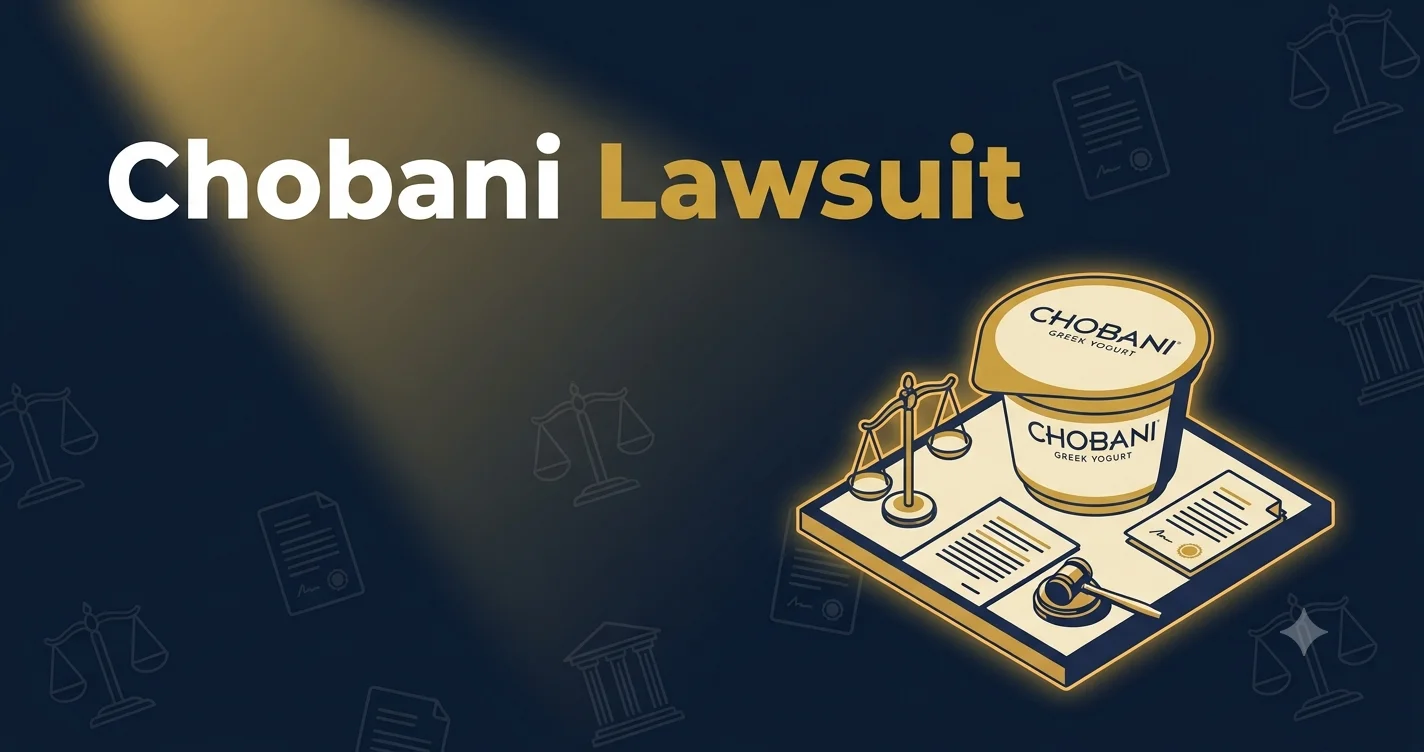
The stakes are real for a company built on a health-and-wellness reputation. Millions of 32-ounce tubs have been sold nationwide, and both lawsuits seek class-wide refunds, a share of Chobani’s profits from the disputed products, and a court order forcing label changes — on top of attorneys’ fees.
In this article, you’ll learn what the Chobani lawsuit is actually about, who filed it and against whom, whether you might qualify for money if the case settles, and what happens next in the litigation.
Here’s the surprising part: according to the complaints, the “missing” 2 grams of protein comes down to a serving-size conversion — Chobani allegedly lists a serving as 3/4 cup (190 grams) instead of the FDA’s roughly 2/3-cup (170-gram) reference amount, which would put the true protein count closer to 18 grams, not 20.
Quick Facts: Chobani Lawsuit
| Detail | Information |
| Plaintiffs | Yolanda Pitre (California) and Mikaela Kinderman (Illinois); a related suit was filed by Hale Knox |
| Defendant | Chobani, LLC |
| Court | U.S. District Court for the Southern District of New York |
| Case Numbers | 1:26-cv-05759 (Pitre v. Chobani); 1:26-cv-05093 (Knox v. Chobani) |
| Case Type | Proposed consumer class action (false advertising / consumer protection) |
| Core Allegation | Inflated serving size on “20g Protein” Greek yogurt overstates actual protein content |
| Filing Date | July 7, 2026 (Pitre); Knox filed several weeks earlier in 2026 |
| Class Status | Not yet certified |
| Settlement | Not publicly disclosed; no settlement fund exists as of this writing |
What Is the Chobani Lawsuit About?
At its core, the Chobani lawsuit is a dispute over food labeling math. The complaints allege that Chobani’s 32-ounce “20g Protein” Greek yogurt containers list a serving size of 3/4 cup (190 grams), which is larger than the reference serving the FDA sets for yogurt.
Federal regulations use “reference amounts customarily consumed” (RACC) to standardize serving sizes across brands so consumers can compare products fairly. Plaintiffs argue Chobani’s larger, non-standard serving size is what allows the “20g protein” claim to appear on the label at all.
Key Takeaway: The lawsuit isn’t claiming the yogurt is unsafe or mislabeled on ingredients — it’s arguing the *serving size itself* is inflated specifically to support a bigger protein number.
Chobani Class Action Lawsuit: Legal Status Overview
Both cases are currently proposed class actions — meaning no judge has yet ruled on whether they can proceed on behalf of a broader group of consumers. Chobani has not filed a formal response to either complaint as of this writing.
• Pitre et al. v. Chobani, LLC — filed July 7, 2026, in the Southern District of New York, represented by Barnow and Associates, P.C.
• Knox v. Chobani, LLC — filed weeks earlier in the same district, brought by plaintiff Hale Knox
Because both suits were filed in the same federal district over the same alleged conduct, it’s plausible (though not yet confirmed) that they could eventually be consolidated or coordinated before a single judge. That decision has not been publicly reported yet.
Latest Update 2026
As of late July 2026, here is where the Chobani lawsuit stands:
| Date | Development |
| 2026 (exact date not publicly disclosed) | Knox v. Chobani, LLC filed in SDNY (Case No. 1:26-cv-05093) |
| July 7, 2026 | Pitre et al. v. Chobani, LLC filed in SDNY (Case No. 1:26-cv-05759) |
| July 2026 | Legal trade press (Law360, Top Class Actions, ClaimDepot) reports on both filings |
| As of this writing | No response from Chobani, no class certification ruling, no settlement talks publicly disclosed |
Key Takeaway: This litigation is in its earliest stages. Anyone telling you there’s already a settlement or a claim form to fill out is getting ahead of the facts — there isn’t one yet.
Key Allegations in the Chobani Protein Labeling Lawsuit
According to the complaints, the core allegations include:
1. Chobani’s labeled serving size (3/4 cup / 190 grams) exceeds the FDA’s reference serving for yogurt (approximately 2/3 cup / 170 grams).
2. At the FDA-referenced serving size, the yogurt allegedly delivers closer to 18 grams of protein rather than the advertised 20 grams.
3. Consumers paid a premium for the product specifically because of the “20g Protein” marketing claim.
4. Plaintiffs say they would have paid less — or not purchased the product at all — had they known the true, standardized protein content.
5. The claims allegedly violate state consumer protection statutes, including California’s Unfair Competition Law, False Advertising Law, and Consumers Legal Remedies Act, and Illinois’s Consumer Fraud and Deceptive Business Practices Act, plus a nationwide unjust enrichment claim.
Is Chobani’s “20g Protein” Claim Actually Accurate?
This is the central question the lawsuit puts before the court, and it isn’t fully settled. Chobani’s label reflects the protein content in the serving size the company has chosen to display, and the company has not publicly conceded that this violates FDA rules.
Plaintiffs’ math suggests that using the government’s standardized reference serving would shave roughly 2 grams off the advertised protein count. Whether a court agrees that this amounts to a legally deceptive practice — rather than a permissible labeling choice — is exactly what the litigation will decide.
Key Takeaway: Treat “18 grams, not 20” as an allegation from the complaint, not a proven fact — no court or regulator has confirmed it as of this writing.
Company Background and How the Protein Dispute Started
Chobani built much of its brand around high-protein, better-for-you dairy products, competing directly with brands like Danone’s Oikos in the crowded Greek yogurt category. The “20g Protein” line has been a flagship product in that positioning.
Notably, Chobani is also currently the *defendant* in a separate, unrelated commercial lawsuit brought by Danone US over high-protein yogurt advertising claims — a business-to-business dispute, not a consumer class action, but it underscores how contentious protein-content marketing has become across the yogurt industry in 2026.
Consumer Complaints and Reviews
Public complaint databases show a mix of general customer service and product-quality complaints against Chobani, though widespread consumer complaints specifically citing the protein serving-size issue were not identified as of this writing. Most of the public record on this specific dispute currently comes from the legal complaints themselves rather than a broader wave of documented consumer complaints.
Key Takeaway: Don’t assume a large public complaint record exists yet — this dispute is largely playing out in the courtroom so far, not in consumer complaint forums.
Who Qualifies for the Chobani Lawsuit? Eligibility Criteria
No class has been certified, so there is no confirmed list of who qualifies for compensation yet. Based on the proposed class definitions in the complaints, eligibility would likely extend to:
• Consumers who purchased Chobani’s 32-ounce “20g Protein” Greek yogurt tubs
• Purchases made within the applicable statute-of-limitations window for each state’s consumer protection laws
• Proposed subclasses specifically for California and Illinois purchasers, alongside a broader nationwide class
Key Takeaway: Until a judge certifies a class or the parties reach a settlement, “eligibility” is speculative — it describes who the lawsuit is trying to represent, not who is guaranteed money.
Chobani Lawsuit Settlement Amount: Payout Estimates
No settlement has been reached, and no dollar figure for a payout has been publicly disclosed. Reports place the plaintiffs’ estimated combined damages figure at around $5 million, but that number reflects the plaintiffs’ own damages calculation in the complaint — not a court-approved or negotiated settlement amount.
| Scenario | Status |
| Individual refund per purchase | Not yet determined |
| Total settlement fund | Not publicly disclosed |
| Estimated plaintiff-side damages claim | Reportedly around $5 million (unverified, pre-settlement) |
Key Takeaway: Any specific payout number you see circulating online for this case should be treated as speculation unless it’s tied to a court-approved settlement, which does not yet exist.
How a Potential Payout Would Be Calculated
If this case eventually settles or a class is certified and Chobani is found liable, payouts in similar food-labeling class actions are typically calculated based on:
• Number of units purchased during the class period (often requiring proof of purchase, like a receipt)
• A pro-rata share of any negotiated settlement fund, divided among all valid claimants
• Possible tiered payments — a smaller amount for claims without proof of purchase, a larger amount for claims with documentation
This is a general pattern seen in comparable consumer class actions, not a confirmed formula for the Chobani case specifically.
How to File a Claim (What Happens If a Settlement Is Reached)
There is currently no claims process for the Chobani protein lawsuit because no settlement exists. If that changes, the typical steps in a case like this would be:
1. A settlement is announced and receives preliminary court approval.
2. A claims administrator sets up an official claims website and claim form.
3. Eligible consumers submit a claim, often with proof of purchase (receipts, loyalty account records, or photos of packaging).
4. The court holds a final approval hearing.
5. Approved claimants receive payment after final approval and any appeal period passes.
Key Takeaway: Bookmark official court dockets or reputable legal news outlets rather than acting on unofficial claim forms — scammers often create fake “claim” pages the moment a lawsuit gets media attention.
Filing Deadline and Statute of Limitations
There is no claims filing deadline yet because no settlement has been reached. Separately, the statute of limitations for the underlying consumer protection claims varies by state — generally three to four years for claims like California’s Unfair Competition Law and Illinois’s Consumer Fraud Act, though the exact window for any individual purchase depends on state law and when the purchase occurred.
If you believe you have an individual claim outside of any future class settlement, consult a consumer protection attorney about your state’s specific deadline rather than relying on general estimates.
Is the Chobani Lawsuit a Scam? What to Know
The underlying lawsuits are real, filed in federal court and reported by legal trade publications and court-record services like Justia and PacerMonitor. What consumers should watch for are scam websites or unsolicited emails claiming you can “file a claim now” for a Chobani settlement.
Since no settlement fund or claims process exists as of this writing, any site asking for personal or financial information to “register” for a Chobani payout should be treated as suspicious.
Other Related Lawsuits Against Chobani
Chobani has faced a string of consumer class actions in recent years, in addition to the protein-labeling suits:
• A 2025-filed lawsuit (Wysocki v. Chobani, LLC, Case No. 3:25-cv-00907, S.D. Cal.) alleging phthalates — plastic-related chemicals — were found in Chobani’s plain Greek yogurt products.
• Prior suits over “Only Natural Ingredients” claims on zero-sugar yogurts.
• Prior suits challenging “45% Less Sugar” comparative marketing claims.
• Prior suits questioning Chobani’s “Fair Trade Certified Dairy” labeling.
• A separate, non-class commercial lawsuit filed by Danone US against Chobani over competing high-protein yogurt marketing claims.
If you’ve researched the [Chobani phthalates yogurt lawsuit](https://lawfold.com/chobani-yogurt-lawsuit-2026/) already, note that it proceeds on a completely separate legal track from the protein-labeling cases discussed here.
Frequently Asked Questions
What is the Chobani lawsuit about?
The Chobani lawsuit refers to two 2026 class actions filed in the Southern District of New York alleging the company inflates the serving size on its “20g Protein” Greek yogurt to make the product appear more protein-dense than it is under FDA reference-serving standards. Chobani has not publicly responded to the allegations as of this writing.
Who qualifies for the Chobani lawsuit?
No class has been certified yet, so there is no confirmed eligibility list. Based on the proposed class definitions, consumers who purchased Chobani’s 32-ounce “20g Protein” Greek yogurt tubs — particularly in California and Illinois — may eventually fall within the proposed class if it is certified or a settlement is reached, but this is not yet guaranteed.
How much is the Chobani lawsuit settlement worth?
No settlement has been reached, so there is no confirmed payout amount. Plaintiffs’ complaints reference an estimated combined damages figure around $5 million, but that is a plaintiff-side estimate, not a court-approved or negotiated settlement value. Any payout figures circulating online should be treated as speculative until a settlement is announced.
Is this the same as the Chobani phthalates lawsuit?
No. The protein-labeling lawsuits (Pitre v. Chobani and Knox v. Chobani) are entirely separate from the phthalates case (Wysocki v. Chobani, Case No. 3:25-cv-00907, filed in the Southern District of California in 2025). The phthalates case concerns chemical testing results in Chobani’s plain Greek yogurt, while the protein cases concern serving-size labeling math.
What is the filing deadline for the Chobani lawsuit?
There is currently no claims filing deadline because no settlement fund exists. If a settlement is eventually reached, a claims deadline will be set by the court as part of the settlement approval process. Consumers should follow official court filings or established legal news sources for updates rather than relying on unofficial deadline claims.
What Chobani Yogurt Buyers Should Do Now
The Chobani lawsuit is still in its earliest procedural stages, with two related complaints filed in the Southern District of New York and no response yet from the company. There is no settlement, no certified class, and no claims process — despite what some third-party sites may imply.
If you purchased Chobani’s “20g Protein” Greek yogurt in 32-ounce containers, the most useful thing you can do right now is simply keep your receipts or order history. That documentation would matter if a settlement is reached down the line.
Read: Fixer to Fabulous Lawsuit
Read: Adriana Chechik Lawsuit
Read: Lexington Law Lawsuit
Read: CeraVe Lawsuit
Read: Spectrum Class Action Lawsuit
Before you do anything else:
• Save proof of purchase for Chobani “20g Protein” yogurt tubs
• Avoid any third-party site asking for payment or personal data to “join” this lawsuit
• Follow updates through court dockets (PacerMonitor, Justia) or established legal news outlets
• Watch for a class certification ruling or settlement announcement before expecting any payout
This case is worth watching, not acting on — yet. As the litigation develops, an official claims process (if one emerges) will be publicly announced through the court, not through unsolicited claim forms.
Sources: Law360, Top Class Actions, ClaimDepot, PacerMonitor, Justia (Dockets), classaction.org, DairyReporter, FindLaw Courtside, Food Business News, and Claims Journal reporting on Pitre et al. v. Chobani, LLC (1:26-cv-05759), Knox v. Chobani, LLC (1:26-cv-05093), Wysocki v. Chobani, LLC (3:25-cv-00907), and Danone US, LLC v. Chobani, LLC (1:25-cv-06217), all filed in U.S. District Courts as cited above.