Apple iCloud Lawsuit 2026: Payouts, Eligibility, Claims
Apple is currently defending a federal class action lawsuit that accuses the company of illegally monopolizing cloud storage on iPhones and iPads. The case, formally known as Gamboa v. Apple Inc., alleges Apple locks consumers into paying for iCloud storage by blocking full access for competing services like Google Drive, Dropbox, and Microsoft OneDrive.
The stakes are significant. Apple reportedly controls the overwhelming majority of cloud storage revenue generated on its own devices, and the proposed class could include tens of millions of U.S. iCloud subscribers. A federal judge has already rejected Apple’s bid to have the case thrown out, a sign the claims have legal teeth.
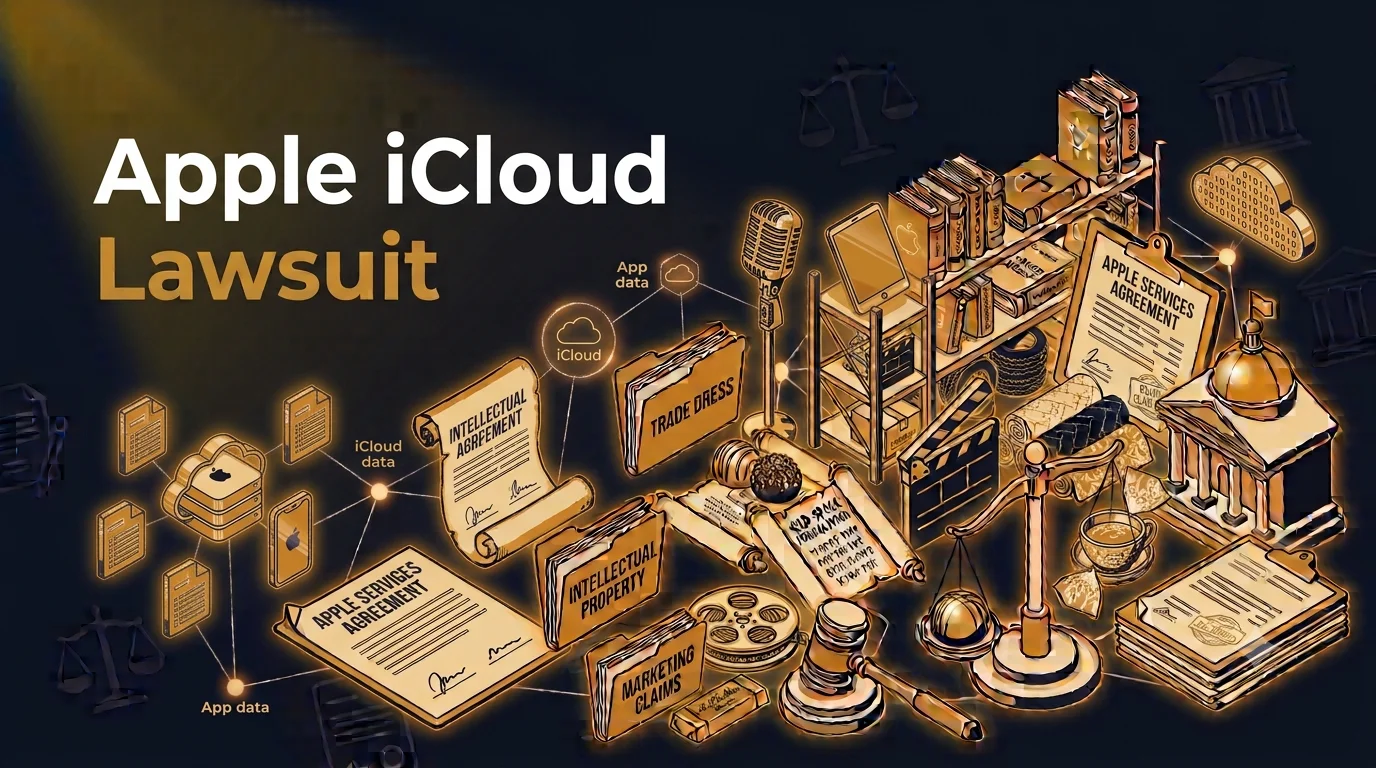
This dispute follows a broader pattern of antitrust scrutiny facing major tech platforms, echoing similar claims raised in other app-store and cloud-services antitrust litigation.
In this article, you’ll learn what the Apple iCloud lawsuit alleges, where the case stands as of mid-2026, who might eventually qualify for compensation, and what a potential payout could look like if the case settles or succeeds at trial.
Here’s a fact that surprises most iPhone owners: reports in the litigation put Apple’s share of cloud storage revenue generated on its own devices at roughly 96%, a figure plaintiffs say is proof of an unlawful lock-in, not just brand loyalty.
Quick Facts
| Plaintiff | Felix Gamboa, individually and on behalf of a proposed class |
| Defendant | Apple Inc. |
| Court | U.S. District Court for the Northern District of California |
| Case Type | Proposed federal class action (antitrust monopolization) |
| Case Number | 5:24-cv-01270 |
| Core Allegation | Apple illegally monopolizes cloud storage by restricting third-party access, forcing consumers to overpay for iCloud |
| Filing Date | March 1, 2024 |
| Status (as of mid-2026) | In discovery; motion to dismiss denied; no settlement reached |
What Is the Apple iCloud Lawsuit About?
The Apple iCloud lawsuit is a proposed class action accusing Apple of using its control over iOS to force consumers into its own cloud storage service, iCloud, rather than letting them freely choose cheaper third-party alternatives.
Plaintiff Felix Gamboa filed the case on March 1, 2024, in the U.S. District Court for the Northern District of California. The lawsuit centers on a legal claim familiar to antitrust watchers: that Apple built a “technological tie” between its hardware and iCloud, then used that tie to suppress competition and inflate prices.
Key Takeaway: This is not a data-breach or privacy case — it’s an antitrust lawsuit about pricing power and market control over cloud storage.
Apple iCloud Class Action Lawsuit: Legal Status Overview
As of mid-2026, the Apple iCloud class action remains active and unresolved. There is no settlement, and no money has been set aside for consumers yet.
The case has cleared an important early hurdle: Apple twice moved to dismiss the complaint, and the presiding judge denied Apple’s renewed motion in June 2025, allowing the core monopolization claims to proceed into discovery.
- Case Name: Gamboa v. Apple Inc.
- Court: U.S. District Court, Northern District of California
- Judge: U.S. District Judge Eumi K. Lee
- Case Number: 5:24-cv-01270
- Legal Theories: Sherman Act Section 2 monopolization; California Unfair Competition Law
Latest Update 2026
According to court filings and legal-news tracking of the case, the lawsuit is presently in the discovery phase, with no trial date publicly scheduled as of this writing.
- March 1, 2024: Complaint filed in the Northern District of California.
- August 16, 2024: Apple files a motion to dismiss, citing security justifications and statute-of-limitations arguments.
- February 2025: Judge Lee dismisses portions of the original complaint but grants leave to amend.
- Spring 2025: Plaintiffs file an amended complaint with, in the court’s words, “substantial new allegations.”
- June 2025: Judge Lee denies Apple’s renewed motion to dismiss on all grounds, allowing the monopoly claims to proceed.
- July 7, 2025: Deadline for Apple to formally answer the complaint.
- Late 2025 into 2026: Case proceeds through discovery; no settlement has been publicly announced.
Key Takeaway: Surviving a motion to dismiss doesn’t guarantee a payout, but it is historically the point where many class actions like this one move toward serious settlement talks.
Key Allegations: How Apple Allegedly Locks Users Into iCloud
The complaint alleges Apple restricts what it calls “restricted files” — categories of data that iCloud can back up and sync but that third-party services reportedly cannot fully access on iOS. Depending on the source reviewed, these restricted categories are described as including app data, iTunes downloads, device settings, encrypted keychain data, and Health app data.
Because rival services can’t offer the same “full-service” backup experience, plaintiffs argue consumers are effectively coerced into buying iCloud storage plans even when cheaper alternatives exist.
- Apple allegedly ties iPhone and iPad functionality to iCloud through technical restrictions, not consumer choice.
- Rival cloud storage providers cannot match iCloud’s device-level integration because of these restrictions, plaintiffs say.
- Apple is alleged to hold approximately 96% of cloud storage revenue generated on its own devices, according to figures cited in the litigation.
- The complaint alleges this dominance lets Apple charge supra-competitive prices for iCloud+ storage tiers.
Key Takeaway: The core legal claim is monopolization under the Sherman Act — not that iCloud is unsafe or defective, but that Apple allegedly rigged the competitive playing field in its own favor.
Is Apple iCloud Actually a Monopoly?
This is the central legal question the case will decide, and it isn’t settled yet. Apple has argued in court filings that its restrictions on third-party access exist for legitimate security and privacy reasons, not to stifle competition.
Plaintiffs counter that security justifications don’t explain why Apple’s own iCloud service can access the same restricted files that rivals cannot. Judge Lee found the amended complaint’s allegations plausible enough to survive dismissal, but “plausible” is a pleading standard — it is not a finding that Apple actually operates an illegal monopoly.
Key Takeaway: No court has yet ruled that Apple is an illegal monopoly. That determination would come later, at summary judgment, trial, or through a negotiated settlement.
Apple’s iCloud Business and How the Dispute Started
iCloud launched in 2011 as Apple’s cloud backup and sync service, tightly integrated into iOS, iPadOS, and macOS. Free storage has remained capped at 5GB for well over a decade, a point plaintiffs’ attorneys frequently cite as evidence Apple benefits from pushing users toward paid iCloud+ tiers.
As iPhone photo libraries, app data, and backups grew larger over the years, more users found themselves needing paid storage — and, according to the complaint, finding fewer genuinely competitive alternatives baked into their devices.
The Gamboa complaint argues this wasn’t accidental: it alleges Apple engineered restrictions specifically to preserve its cloud storage revenue as device usage — and data usage — grew.
Consumer Complaints About iCloud Pricing and Storage Limits
Long before this lawsuit, iCloud’s storage limits and pricing were common sources of consumer frustration. Complaints about the persistent 5GB free tier and pressure to upgrade have circulated for years across consumer forums and tech press coverage.
- Frequent complaints about running out of free iCloud storage within weeks of setting up a new iPhone.
- Criticism that backups fail or become unreliable once free storage is exhausted.
- Users noting that competing cloud services offer more free storage but can’t fully replace iCloud’s device-level backup functions.
Key Takeaway: These consumer frustrations aren’t themselves part of the legal case, but they form the real-world backdrop the lawsuit’s antitrust allegations are built on.
Who Qualifies for the Apple iCloud Lawsuit? Eligibility Criteria
No settlement has been reached, so there is no open claims process today. That said, based on the scope of the complaint, legal trackers following the case describe a proposed class that would likely include:
- U.S. consumers who purchased a paid iCloud storage plan (iCloud+) during the class period referenced in the complaint, reportedly beginning around March 2020 or earlier.
- iPhone and iPad users who were subject to Apple’s alleged restrictions on third-party cloud access.
Important: These criteria describe the proposed class as alleged in the complaint — not a confirmed, court-approved settlement class. Eligibility could change significantly if and when a settlement or judgment is reached.
Apple iCloud Lawsuit Settlement Amount: Payout Estimates
No settlement fund currently exists in this case, and Apple has not agreed to pay anything. Any dollar figures circulating online are estimates from legal analysts and plaintiffs’ firms tracking the litigation, not confirmed amounts.
- Some legal commentators tracking the case have floated a potential settlement fund in the range of $300 million to $500 million, based on the size of the proposed class and precedent from comparable tech antitrust settlements — this figure is not confirmed by any court filing.
- Because the claims include a Sherman Act monopolization theory, successful plaintiffs could theoretically be entitled to treble (triple) damages under federal antitrust law, though this would depend on the outcome at trial.
- Comparable consumer antitrust class actions have historically resulted in individual payouts ranging from roughly $50 to a few hundred dollars per claimant, though every case is different.
Key Takeaway: Treat any specific payout number you see online as a rough estimate, not a promise. There is currently no settlement to file a claim against.
How an Apple iCloud Payout Could Be Calculated
If this case eventually settles or Apple is found liable, a payout would most likely be calculated the way similar antitrust class actions have been handled in the past:
- A total settlement or judgment fund is set, minus attorneys’ fees, administrative costs, and court-approved deductions.
- The remaining fund is divided among verified class members, often based on how much they spent on iCloud storage during the class period.
- Consumers who paid for higher storage tiers over a longer period would likely receive a larger individual share than those with brief, low-tier subscriptions.
- Payouts are typically distributed on a pro-rata basis if claims exceed the available fund.
This process cannot begin until a settlement is approved by the court or a final judgment is entered — neither has happened as of this writing.
How to File a Claim in the Apple iCloud Lawsuit (What to Expect)
There is no claim form to file right now. Because no settlement exists, any website or email claiming you can “sign up” for a guaranteed iCloud lawsuit payout today should be treated with caution.
If a settlement is eventually reached, the typical process in cases like this looks like:
- The court grants preliminary approval of a settlement and appoints a claims administrator.
- Notice is sent to potential class members, often by email or postal mail, along with instructions and deadlines.
- Class members submit a claim form, usually online, and may need to show proof of an eligible iCloud subscription.
- The court holds a fairness hearing before granting final approval.
- Approved claimants receive payment after the final approval and any appeals period pass.
Key Takeaway: Bookmark reliable legal-news sources and watch for official court notices — don’t pay anyone a fee to “register” for this lawsuit, since legitimate class action claims are always free to file.
Apple iCloud Lawsuit Filing Deadline and Statute of Limitations
Because there is no settlement yet, there is no claim-filing deadline to worry about today. If a settlement is reached, the court will set a specific claims deadline as part of the approval process, typically several months after notice goes out.
Separately, the underlying antitrust claims themselves are subject to a statute of limitations, which is one reason Apple’s dismissal motion argued some claims were time-barred. The court’s June 2025 ruling allowed the amended claims to proceed, but the ultimate scope of the recoverable time period could still be narrowed as the case develops.
Key Takeaway: There’s nothing to file and no deadline to meet right now — the real risk is falling for a scam site pretending otherwise.
Is the Apple iCloud Lawsuit a Scam? What to Watch Out For
The lawsuit itself is real and pending in federal court, but scams frequently spring up around high-profile cases like this one. Because there is no active claims process, any offer asking for upfront payment, your Apple ID password, or sensitive financial information “to register” for the iCloud lawsuit is not legitimate.
- Legitimate class action claims never require payment to participate.
- Official notices come from a court-appointed claims administrator, not random email blasts or social media ads, and only after a settlement is approved.
- Apple will never need your iCloud password to process a legal claim.
Key Takeaway: If you weren’t contacted by a court-approved claims administrator with a specific case reference, be skeptical of anything asking for money or credentials related to this lawsuit.
Other Related Lawsuits and Broader Context
The Gamboa case isn’t the only legal challenge Apple faces over iCloud. A separate £3 billion class action in the U.K. Competition Appeal Tribunal has been approved to proceed, alleging Apple’s iCloud practices harmed roughly 40 million U.K. consumers between November 2018 and mid-2026, with estimated individual compensation of about £77 if the case succeeds — but that is a distinct case in a different legal system, with its own separate process.
Apple has also faced unrelated iCloud litigation, including a since-dismissed lawsuit concerning child sexual abuse material allegedly circulated via iCloud, which a court dismissed on Section 230 grounds in mid-2026. That case does not involve pricing, storage, or antitrust claims and is legally separate from the Gamboa matter.
For broader context on how tech antitrust cases typically play out, see our related coverage of other app-store and platform antitrust lawsuits.
Key Takeaway: If you’re an Apple customer, it’s worth distinguishing between this U.S. antitrust case, the separate U.K. case, and other unrelated iCloud litigation — they involve different courts, different allegations, and different (if any) paths to compensation.
Frequently Asked Questions
What is the Apple iCloud lawsuit about?
The Apple iCloud lawsuit, Gamboa v. Apple Inc., is a proposed federal class action alleging Apple illegally monopolizes cloud storage on iPhones and iPads. Plaintiffs claim Apple restricts third-party cloud services from accessing certain data types, effectively forcing consumers to pay for iCloud storage instead of choosing a cheaper competitor. The case alleges violations of the Sherman Act and California’s Unfair Competition Law. It is currently in discovery, with no settlement reached as of mid-2026.
Who qualifies for the Apple iCloud lawsuit?
No court-approved settlement class exists yet, so formal eligibility hasn’t been finalized. Based on the complaint, the proposed class would likely include U.S. consumers who purchased paid iCloud storage plans during the alleged class period, reportedly starting around 2020. This could change significantly depending on how the litigation, and any eventual settlement, is ultimately structured and approved by the court.
How much could the Apple iCloud settlement pay out?
No settlement amount has been agreed to or confirmed. Some legal analysts tracking the case have estimated a potential fund in the range of $300 million to $500 million based on comparable tech antitrust cases, but this is speculative and not verified by any court filing. If individual payouts are eventually issued, comparable cases suggest they could range from roughly $50 to a few hundred dollars per claimant, depending on how much each person spent on iCloud.
What happens if Apple takes the iCloud case to trial?
If the case proceeds to trial rather than settling, a judge or jury would need to determine whether Apple’s conduct actually violated antitrust law. Given the Sherman Act claims involved, a plaintiffs’ verdict could theoretically expose Apple to treble damages. Trials in complex antitrust class actions can take years to reach, and most cases that survive a motion to dismiss, as this one has, end up settling before a trial verdict.
When is the filing deadline for the Apple iCloud lawsuit?
There is currently no claim-filing deadline because no settlement has been reached. If the case settles or Apple is found liable, the court will set a specific claims deadline as part of the approval process, and that deadline will be publicized through official case notices. Consumers don’t need to take any action right now to preserve a future right to file, should a settlement eventually be approved.
Read: TurboTax Lawsuit
Read: Costco Auto Renewal Lawsuit
Read: Mario Lopez Lawsuit
Read: Carnival Tequila Lawsuit Verdict
Read: Midland Credit Management Lawsuit
What Apple iCloud Users Should Watch For Next
The Apple iCloud lawsuit is a live, closely watched antitrust case — but it is not yet a source of compensation for consumers. The case has cleared a motion to dismiss and entered discovery, a meaningful step, though far short of a settlement or verdict.
If you’re an iCloud+ subscriber, there’s no action required today. No claim form exists, and nobody can legitimately promise you a payout amount at this stage.
What’s worth doing in the meantime:
- Keep records of your iCloud storage plan and payment history, in case a future claims process asks for proof of purchase.
- Rely on official court filings and reputable legal-news coverage, not unsolicited emails or ads, for updates.
- Ignore any site or message demanding payment or your Apple ID credentials to “join” this lawsuit.
This page will reflect the case as it stands as of mid-2026. Watch for updates if Apple’s answer to the complaint, discovery developments, or settlement talks move the case forward.
- Hagens Berman, “Apple iCloud Antitrust Litigation” case page (hbsslaw.com)
- Top Class Actions, “Apple must face iCloud monopoly class action in light of ‘substantial new allegations,’ judge rules”
- All About Lawyer, “Apple iCloud Storage Lawsuit 2026, Active Antitrust Case”
- Macworld, “$4B iCloud class action suit gets OK to proceed to U.K. court”
- CNN Business, “Judge dismisses lawsuit against Apple over alleged child sexual abuse material on iCloud” (July 2026)
Sources
- Hagens Berman, “Apple iCloud Antitrust Litigation” case page (hbsslaw.com)
- Top Class Actions, “Apple must face iCloud monopoly class action in light of ‘substantial new allegations,’ judge rules”
- All About Lawyer, “Apple iCloud Storage Lawsuit 2026, Active Antitrust Case”
- Macworld, “$4B iCloud class action suit gets OK to proceed to U.K. court”
- CNN Business, “Judge dismisses lawsuit against Apple over alleged child sexual abuse material on iCloud” (July 2026)