Dwayne Johnson Energy Drink Lawsuit 2026: Settlement Payouts
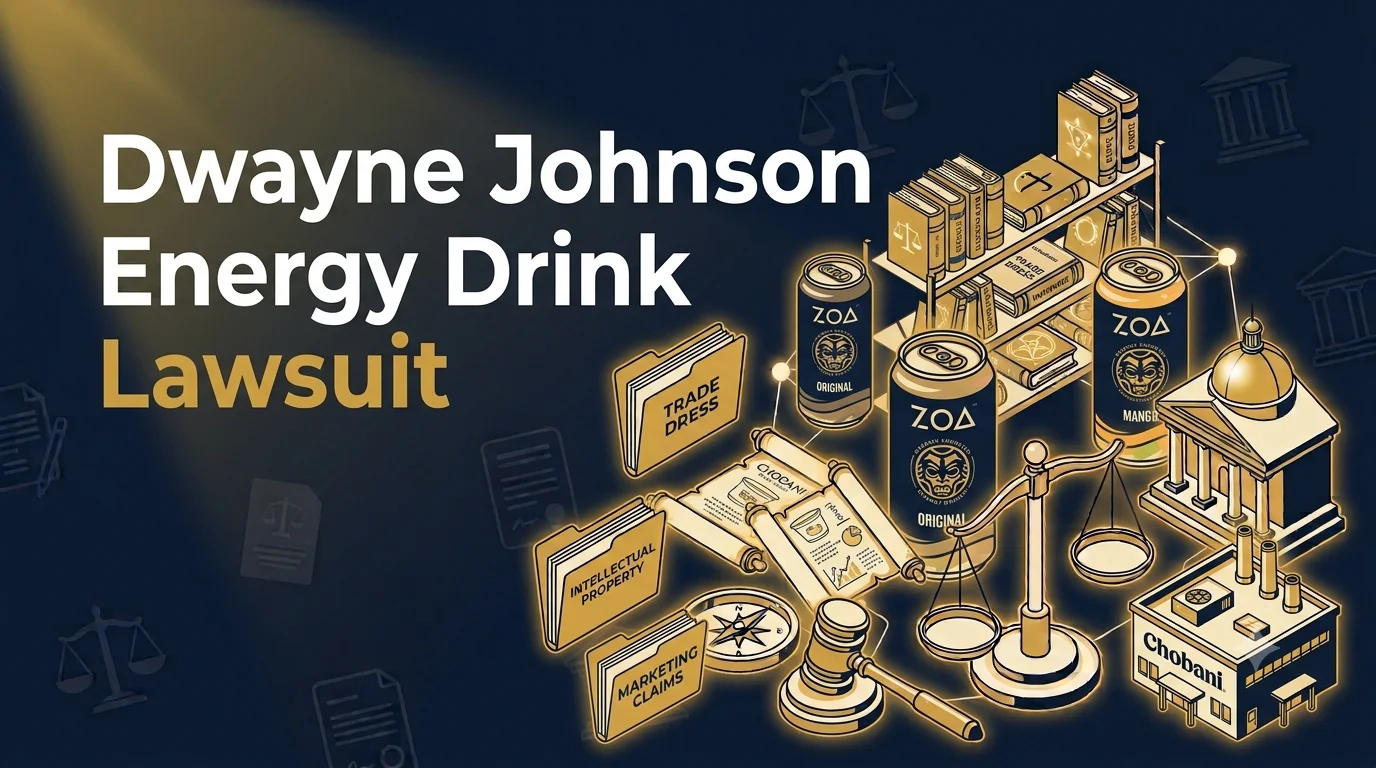
Dwayne “The Rock” Johnson’s energy drink company, ZOA Energy, agreed to a $3 million class action settlement after a customer alleged the brand’s “0 Preservatives” labeling was false because the drinks contain citric acid and ascorbic acid.
The case drew wide attention specifically because of Johnson’s celebrity ownership stake, and the settlement covers a broad class of consumers nationwide who purchased the affected cans over roughly a four-year window.
This case follows a broader pattern of “clean label” litigation, where companies face lawsuits over claims like “0 preservatives” or “all natural” that plaintiffs argue don’t hold up to ingredient-level scrutiny.
Here’s a detail that surprised many fans: despite agreeing to pay $3 million, ZOA Energy never admitted any wrongdoing, and the settlement documents explicitly state the company maintains its labeling was “truthful, accurate, and compliant with applicable law.”
Quick Facts
| Plaintiff | Mikhail Gershzon, individually and on behalf of a proposed class |
| Defendant | ZOA Energy, LLC (co-founded by Dwayne Johnson) |
| Court | U.S. District Court for the Northern District of California, Case No. 3:23-cv-5444-JD |
| Case Type | Class action settlement (false advertising / consumer protection) |
| Core Allegation | ZOA Energy drinks labeled “0 Preservatives” allegedly contained citric acid and ascorbic acid, ingredients plaintiffs say function as chemical preservatives |
| Filing Date | October 23, 2023 |
What Is the Dwayne Johnson Energy Drink Lawsuit About?
The Dwayne Johnson energy drink lawsuit centers on ZOA Energy, the beverage brand Johnson co-founded, and specific labeling claims printed on its cans.
Plaintiff Mikhail Gershzon alleged that ZOA Energy drinks marketed with a “0 Preservatives” claim actually contained citric acid and ascorbic acid, ingredients the complaint argued function as chemical preservatives, making the labeling misleading to consumers under California consumer protection law.
Key Takeaway: This lawsuit was about ingredient labeling accuracy, not a claim that the drinks were unsafe to consume — it centered entirely on whether “0 Preservatives” was a truthful statement.
Dwayne Johnson Energy Drink Class Action Lawsuit: Legal Status Overview
This case has already reached resolution through a court-supervised settlement, making its legal status largely historical at this point.
- Case Name: Gershzon v. ZOA Energy, LLC
- Case Number: 3:23-cv-5444-JD
- Court: U.S. District Court for the Northern District of California
- Preliminary Approval: Granted November 21, 2025
- Final Approval Hearing: Held March 26, 2026, in San Francisco
Key Takeaway: Because this case reached a preliminarily approved settlement, it never proceeded to a trial or a court ruling on whether the “0 Preservatives” claim was actually false — the outcome was negotiated, not adjudicated.
Latest Update 2026
The most significant recent development in this case is the settlement’s progression through final court approval.
- February 13, 2026: Deadline passed for class members to exclude themselves from the settlement or file an objection.
- February 20, 2026: Deadline passed for class members to submit a claim form for settlement payment.
- March 26, 2026: The scheduled final approval hearing took place in Courtroom 11 of the San Francisco federal courthouse, where the court considered whether to grant final approval to the settlement.
- As of this writing, publicly available reporting has not separately confirmed the final approval hearing’s outcome or the start date for payment distribution, though the settlement’s own terms indicate payments begin only after final approval and the resolution of any appeals.
Key Takeaway: Both the claims deadline and the final approval hearing have already passed — this settlement is in its final stages, even though independent confirmation of the final approval order was not available in the sources reviewed for this article.
Key Allegations Against ZOA Energy
The complaint centered on a narrow but specific labeling dispute.
- ZOA Energy drinks were marketed and labeled with a “0 Preservatives” claim.
- The complaint alleged the drinks contained citric acid and ascorbic acid, ingredients plaintiffs argued function as preservatives despite not being labeled as such.
- Plaintiffs argued this labeling misled health-conscious consumers who specifically sought out preservative-free beverages.
- ZOA Energy disputed the characterization, maintaining that its labeling and marketing were truthful, accurate, and legally compliant.
Key Takeaway: The case hinged on a fairly technical question — whether specific acids commonly used for flavor or acidity also legally count as “preservatives” for labeling purposes — rather than a broader safety concern.
Is “0 Preservatives” Labeling Actually Misleading? Myth-Check
This is essentially the core legal question the lawsuit raised, and it was never resolved by a court ruling. Citric acid and ascorbic acid are commonly used in beverages for flavor, acidity balance, and antioxidant properties, and they can also have some preservative-like effects depending on formulation and concentration.
Because ZOA Energy settled rather than litigating the issue to a verdict, there’s no court finding on whether the “0 Preservatives” claim was legally false. The settlement resolves the dispute financially without establishing that answer as a matter of law.
Key Takeaway: A company agreeing to settle a labeling lawsuit isn’t the same as a court finding the label was deceptive — it often reflects a business decision to avoid the cost and uncertainty of continued litigation.
ZOA Energy and Dwayne Johnson Company Background
ZOA Energy is a energy drink brand co-founded by actor and producer Dwayne Johnson, positioned in the market partly around health-conscious branding, including claims about natural ingredients and the absence of preservatives.
The brand grew quickly in a competitive energy drink market that has increasingly emphasized “clean label” marketing, a positioning strategy that has also made several beverage brands, including ZOA, targets of similar labeling-focused class action lawsuits in recent years.
Key Takeaway: ZOA’s health-forward marketing angle, appealing partly because of what the drinks reportedly don’t contain, is precisely what made a labeling accuracy dispute like this one legally significant.
Consumer Reactions and Complaints About ZOA Energy Labeling
Public reaction to this case centered heavily on the contrast between Johnson’s celebrity-driven, health-oriented marketing for the brand and the underlying technical labeling dispute.
- News coverage widely emphasized Johnson’s involvement and public image alongside the lawsuit’s allegations.
- Consumer interest in the settlement was notably high, driven in part by the relatively accessible payout process, including a no-receipt-required option.
- Some coverage noted the case as part of a broader wave of scrutiny over “clean label” claims across the beverage industry.
Key Takeaway: This case attracted more public attention than a typical beverage-labeling settlement largely because of Johnson’s celebrity profile, even though the underlying legal dispute was fairly typical of food and beverage class actions.
Who Qualified for the ZOA Energy Settlement? Eligibility Criteria
The settlement’s claims window has now closed, but for reference, eligibility was defined as follows:
- U.S. consumers who purchased one or more ZOA Energy products labeled “0 Preservatives” for personal or household use.
- Purchases made between March 1, 2021, and November 21, 2025.
- Claims needed to be submitted online or postmarked by the February 20, 2026 deadline.
Important: Because this deadline has passed, these criteria are provided for historical reference. Consumers who did not submit a timely claim are generally no longer able to participate in this specific settlement.
ZOA Energy Settlement Amount: Payouts Available
The settlement made available a total fund of $3 million for eligible class members, distributed based on documentation provided.
- With proof of purchase: Class members could claim $1 per unit purchased, up to a maximum of $150 per household.
- Without proof of purchase: Class members could still claim $1 per unit purchased, up to a maximum of $10 per household.
- Acceptable proof of purchase included receipts, retailer purchase records, removed UPC codes, or other third-party documentation confirming the purchase and date.
- If total approved claims exceed the available settlement funds after fees and costs, individual payments were subject to pro-rata reduction.
Key Takeaway: The no-receipt option, capped at $10, made this a relatively accessible settlement to claim into, which likely contributed to strong public interest in the case before the deadline passed.
How the ZOA Energy Payout Was Calculated
The settlement used a straightforward, per-unit calculation structure common in consumer labeling class actions:
- Each verified unit purchased during the class period was valued at $1.
- Claimants without proof of purchase were capped at a $10 total household payout, regardless of how many units they claimed.
- Claimants with proof of purchase could claim more per household, up to the $150 cap.
- If total valid claims exceeded the $3 million fund after deducting fees and administrative costs, all payments would be reduced proportionally.
Key Takeaway: Because payments were explicitly capped and subject to potential pro-ration, the actual per-person payout could end up lower than the maximum figures depending on how many valid claims were ultimately submitted.
How to Check Your Status in the ZOA Energy Settlement
Although the claims filing deadline has passed, class members with previously submitted claims can still track their settlement status through official channels.
- Visit the official settlement website, ZoaSettlement.com, for case updates.
- Contact the settlement administrator, Kroll Settlement Administration LLC, at (833) 890-6436 with questions about a previously submitted claim.
- Watch for official payment notifications, which are only issued after final court approval and the resolution of any appeals.
Key Takeaway: If you already filed a claim before the deadline, there’s nothing more required from you right now beyond waiting for official payment processing to be completed.
Filing Deadline and Statute of Limitations
The claim filing deadline for this settlement was February 20, 2026, and the deadline to exclude yourself or object was February 13, 2026. Both deadlines have passed as of this writing, and the settlement is not accepting new claims.
Consumers who missed this window and still believe they have an individual claim related to ZOA Energy’s labeling would need to consult an attorney about whether any separate, individual legal options remain available, since this specific class settlement no longer offers a path to file.
Key Takeaway: If you’re seeing this settlement mentioned now for the first time, the claims window has already closed — there’s no current action to take to join this particular settlement.
Is the Dwayne Johnson Energy Drink Lawsuit a Scam?
The underlying lawsuit and settlement are real, court-supervised, and involve a legitimate claims administrator. However, because the case involves a well-known celebrity, it’s worth being cautious of unofficial sites or messages that may try to capitalize on the attention.
- The only official settlement website is ZoaSettlement.com, and the official administrator is Kroll Settlement Administration LLC.
- Legitimate settlement claims never require an upfront payment to participate.
- Since the claims deadline has passed, any message claiming you can still “sign up now” for a new ZOA Energy claim should be treated with skepticism.
Key Takeaway: The real settlement has already closed its claims window, which makes this a good moment to be especially cautious of any site claiming otherwise.
Other Related Lawsuits and Broader Context
The ZOA Energy case fits into a broader wave of “clean label” litigation across the food and beverage industry, where companies have faced lawsuits over claims like “0 preservatives,” “all natural,” or “no artificial ingredients” that plaintiffs argue don’t hold up under ingredient-level scrutiny.
For broader context on how similar beverage and food labeling class actions have played out, see our related coverage of other “clean label” consumer protection settlements in the food and beverage space.
Key Takeaway: If you regularly purchase beverages or foods marketed around what they don’t contain, cases like this one are a reminder that specific labeling claims can become the subject of real legal scrutiny.
Frequently Asked Questions
What is the Dwayne Johnson energy drink lawsuit about?
The Dwayne Johnson energy drink lawsuit refers to Gershzon v. ZOA Energy, LLC, a class action alleging that ZOA Energy drinks labeled “0 Preservatives” actually contained citric acid and ascorbic acid, ingredients plaintiffs argued function as preservatives. ZOA Energy, co-founded by Dwayne Johnson, agreed to a $3 million settlement without admitting wrongdoing, and the case received preliminary court approval in November 2025.
Who was eligible for the ZOA Energy settlement?
Eligible class members were U.S. consumers who purchased ZOA Energy products labeled “0 Preservatives” for personal or household use between March 1, 2021, and November 21, 2025. The claims filing deadline was February 20, 2026, which has now passed, meaning new claims are generally no longer being accepted under this settlement.
How much did the ZOA Energy settlement pay out?
Eligible class members with proof of purchase could claim $1 per unit purchased, up to a maximum of $150 per household, while those without proof of purchase could claim up to $10 per household. If total valid claims exceeded the $3 million settlement fund after fees and costs, individual payments were subject to proportional reduction, meaning actual payouts could be lower than the stated maximums.
Did ZOA Energy admit its “0 Preservatives” labeling was false?
No. As part of the settlement, ZOA Energy explicitly denied the allegations and maintained that its labeling and marketing were truthful, accurate, and compliant with applicable law. Settling a lawsuit is a business decision to resolve litigation risk and cost, and it does not constitute a legal finding or admission that the underlying claims were true.
Is there still time to file a claim in the Dwayne Johnson energy drink lawsuit?
No, the deadline to submit a claim was February 20, 2026, and that deadline has passed. The final approval hearing for the settlement took place March 26, 2026. Consumers who missed the filing window are generally no longer able to participate in this specific settlement and would need to consult an attorney about any separate individual options, if applicable.
Read: Old Spice Lawsuit
Read: Phillies Karen Lawsuit
Read: Lindt Chocolate Lawsuit
Read: Jake Paul Lawsuit
Read: Antthony Mark Hankins Lawsuit
What ZOA Energy Customers Should Know Now
The Dwayne Johnson energy drink lawsuit against ZOA Energy has already moved through the class action settlement process, from initial filing in October 2023 to a $3 million settlement that received preliminary approval in late 2025 and a final approval hearing in March 2026.
For most ZOA Energy customers, there’s no action left to take on this specific case — the claims deadline has passed, and the settlement is winding through final approval and, eventually, payment distribution.
If you already submitted a claim before the deadline:
- Save any confirmation number or documentation from your claim submission.
- Check ZoaSettlement.com periodically for updates on payment timing.
- Contact the settlement administrator directly with specific questions about your individual claim status.
Readers researching this case for general awareness should treat it as a largely resolved settlement, useful context for understanding “clean label” litigation trends, rather than an active opportunity to file a new claim.
- Top Class Actions, “$3M ZOA Energy class action settlement”
- ClassAction.org, “$3M ZOA Energy Settlement Ends Class Action Lawsuit Over ‘Zero Preservatives’ Claim”
- PR Newswire, “Purchasers Of ZOA Energy Drinks Labeled With ‘0 Preservatives’ May Be Entitled To A Payment From A Class Action Settlement”
- Yahoo News, “Dwayne Johnson’s Fast-Growing Energy Drink Company Agrees To Settlement Over Claims It Deceived US Customers”
- KARE11 / King5, “You could get $150 as part of a settlement with Dwayne ‘The Rock’ Johnson’s energy drink company”
- U.S. District Court for the Northern District of California, Gershzon v. ZOA Energy, LLC, No. 3:23-cv-5444-JD
Sources
- Top Class Actions, “$3M ZOA Energy class action settlement”
- ClassAction.org, “$3M ZOA Energy Settlement Ends Class Action Lawsuit Over ‘Zero Preservatives’ Claim”
- PR Newswire, “Purchasers Of ZOA Energy Drinks Labeled With ‘0 Preservatives’ May Be Entitled To A Payment From A Class Action Settlement”
- Yahoo News, “Dwayne Johnson’s Fast-Growing Energy Drink Company Agrees To Settlement Over Claims It Deceived US Customers”
- KARE11 / King5, “You could get $150 as part of a settlement with Dwayne ‘The Rock’ Johnson’s energy drink company”
- U.S. District Court for the Northern District of California, Gershzon v. ZOA Energy, LLC, No. 3:23-cv-5444-JD